Blog · Technology
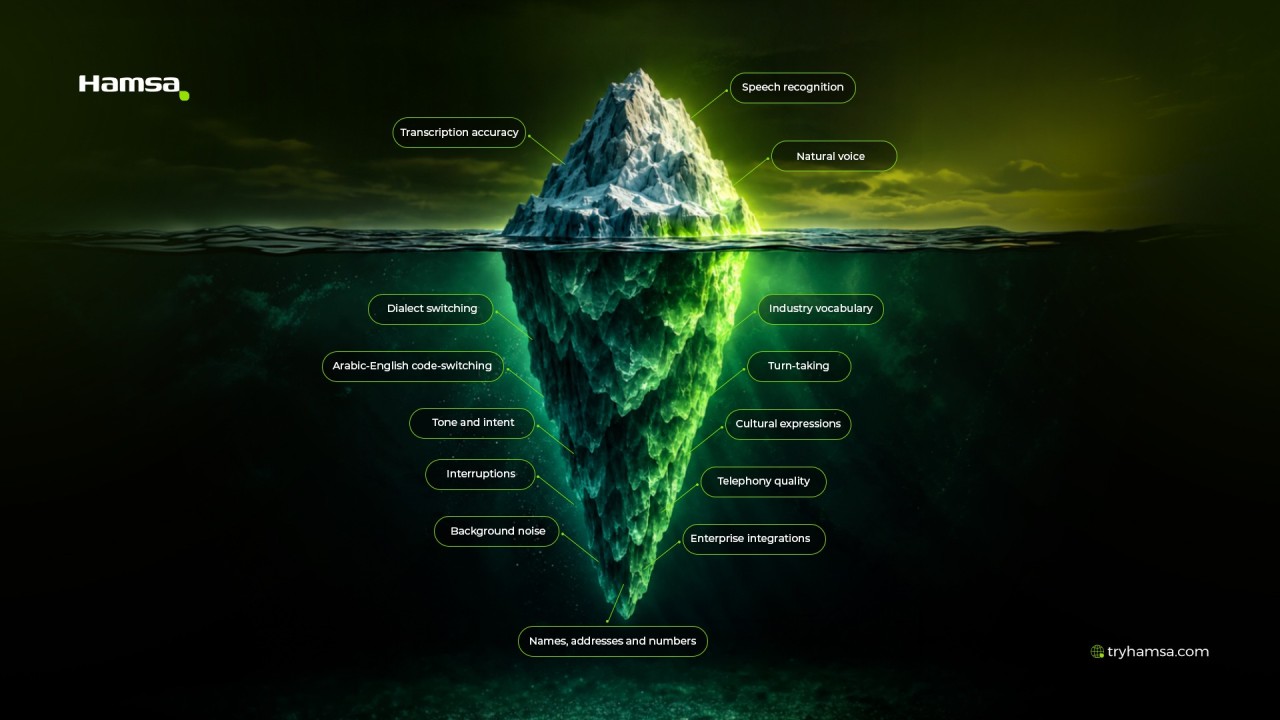
A Good Transcript and a Natural Voice Are Only the Tip of the Iceberg
Hamsa Team·September 27, 2026
A customer calls and says: "I need to move my delivery to tomorrow, and please make sure it goes to my new address."
The AI might transcribe every word correctly. But can it understand that the customer wants to reschedule a delivery and update an address? Can it catch a correction halfway through, confirm the right details, and make both changes in the company's system?
That is the difference between recognizing Arabic words and understanding an Arabic conversation.
Speech recognition is the visible part of the iceberg.
Underneath, real conversations shift between Arabic dialects and English, use local expressions and industry terms, and carry meaning through tone as well as words.
People pause, interrupt, change their minds, and give names or numbers that the AI needs to get exactly right.
For an enterprise voice agent, understanding also has to lead somewhere. It needs to know when to ask a follow-up question, when to hand over to a person, and how to connect the conversation to the systems that can actually resolve the request.
A polished demo is only the beginning. The real test is whether the experience still works when customers speak naturally, at scale, in the dialects they use every day.
At Hamsa, we're building Arabic-first Voice AI for that reality: the full conversation, not just the transcript.
What's been the hardest part of bringing Arabic Voice AI into real customer conversations for your team?
Hear it for yourself.
Try Hamsa’s models live on the homepage demo. No signup needed.